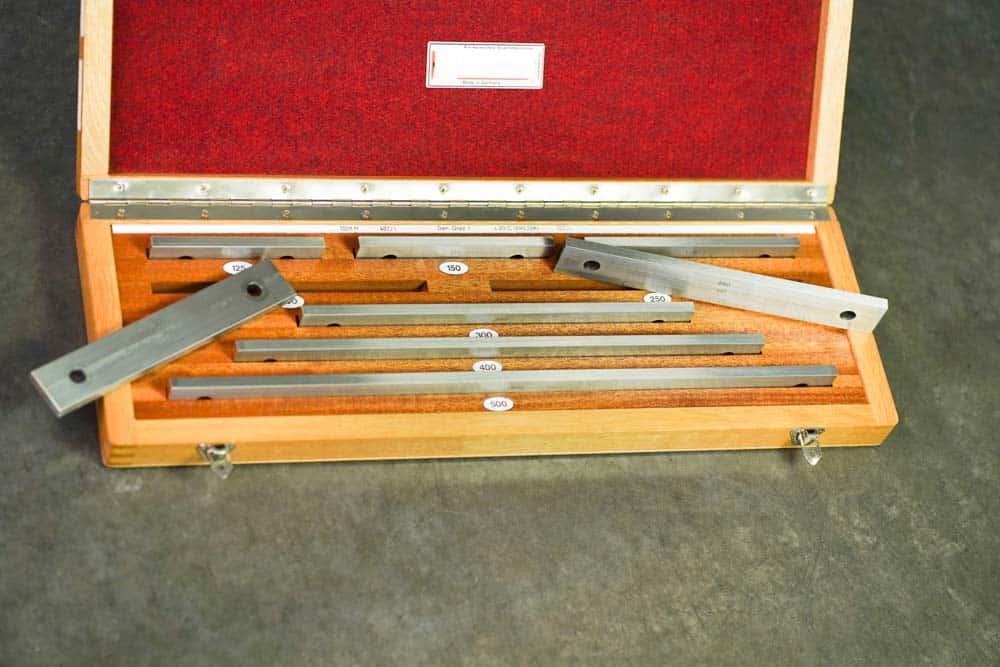
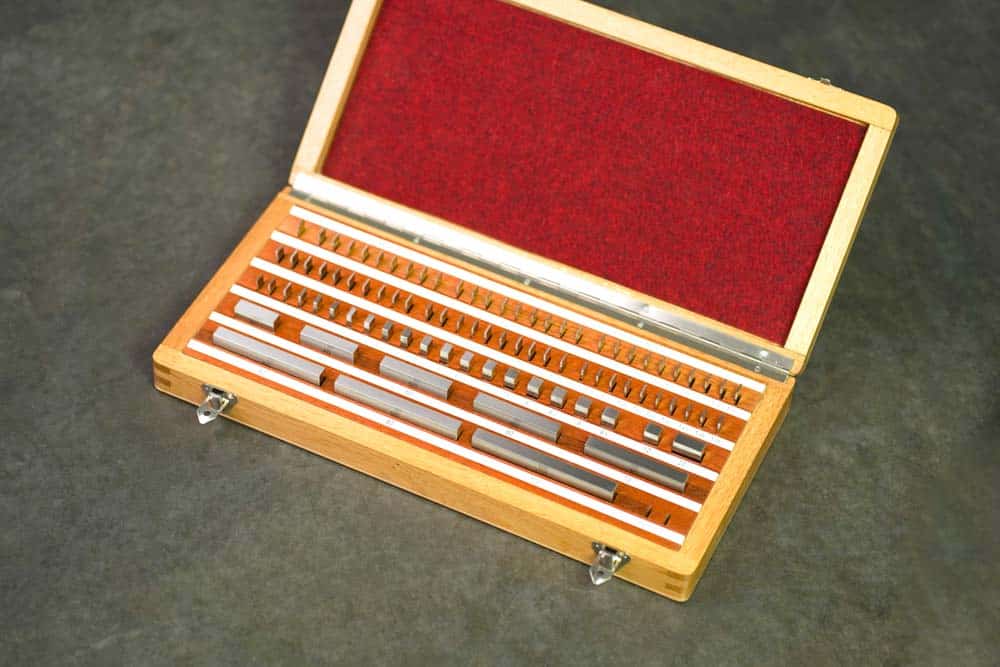
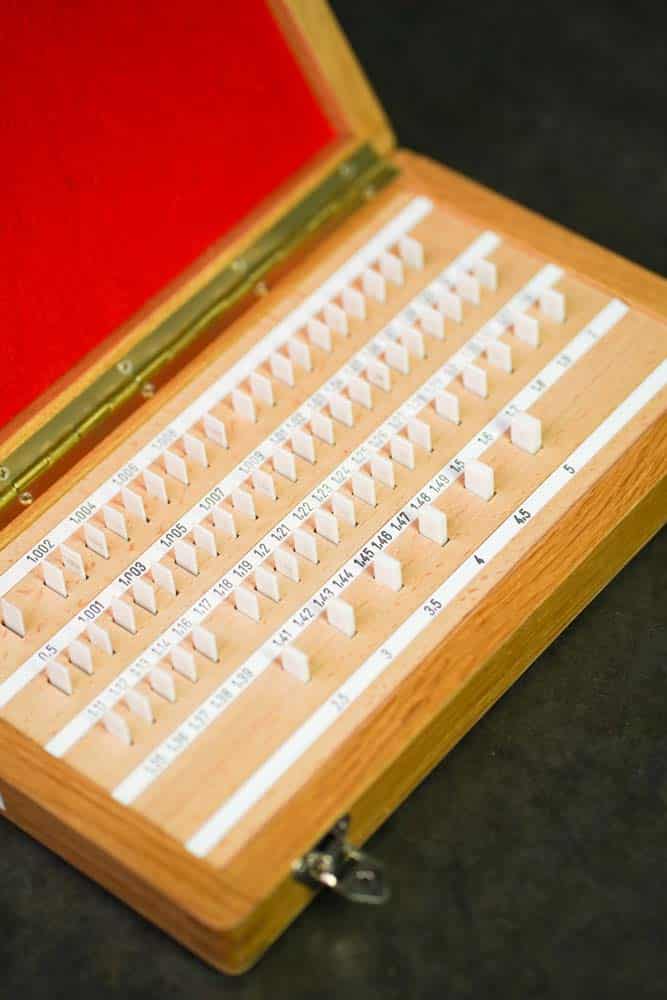
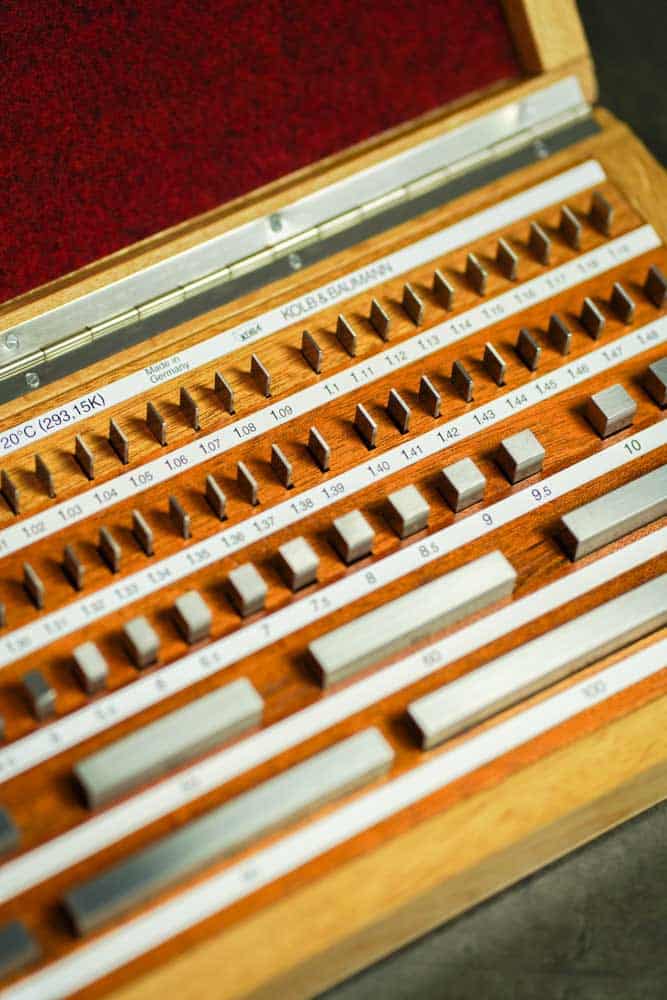
KOBA Gauge Blocks are manufactured and verified to the specifications of DIN EN ISO 3650. As tolerances are kept to a minimum by internal standards, it is guaranteed that every KOBA Gauge Block is within the limits stipulated. The high level of accuracy and the reliability of the measuring results are guaranteed by two separate feed-backs attributed to the internationally fixed unit of length by means of a wave length:
- permanent comparison with master gauges interferometrically verified by the Physikalisch-Technische Bundesanstalt PTB
- parallel to this calibration in our fully airconditioned laboratories
Tolerance ranges of the individual grades within the limits of which the actual size is guranteed, can be taken from the table above. The durability of gauge blocks is achieved by a special process developed by us, combining natural and artifical ageing. The grade of accuracy should be selected according to the intended purpose.
K: Gauge blocks of grade K with a DAkkS calibration certificate are excellently suited as the most accurate measuring standard of the geometric dimension length. Their field of application is checking gauge blocks of lower grades. The purchase of gauge blocks of grade K always includes a DAkkS calibration certificate. This shows the deviation from the nominal dimension for each gauge block.
0: Used as master gauges for all accurate measurements of length, for checking all gauge blocks in use, for final inspection, for setting accurate measuring instruments.
I: For checking of gauges, for setting measuring instruments.
II: Used as standard for setting or workshop gauges for jig-, gauge- as well as machine construction
A PTB calibration is available on request. In most factories the use of only one grade is not sufficient, as the accuracy varies in the individual departments and manufacturing stages. But just this very fact implies the efficient use of gague blocks. An example: Once gauge blocks of grade 0 are no longer accurate enough for inspection (as a result of frequent use) they can be passed on to a department or workshop place were the demands on the accuracy are accordingly lower. We recommend, though, to have them inspected at our laboratory before passing on.